



What To Expect At Your Free Initial Consultation
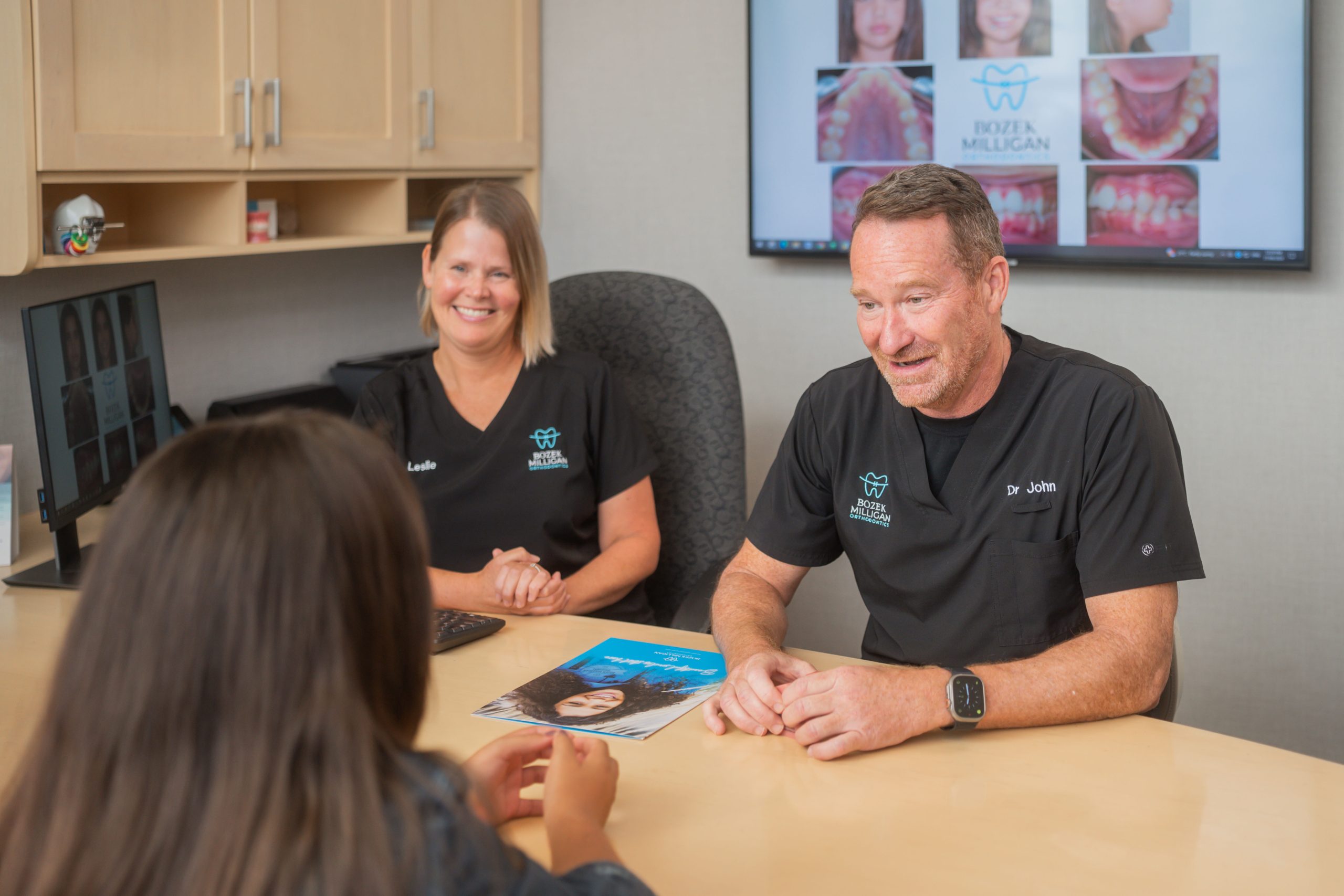
At your first visit to Bozek Milligan Orthodontics you will meet with Dr. John or Dr. Mel and our expert team to better assess your orthodontic needs. You’ll be with us for 60 minutes while we take x-rays as needed, photos, a 3D scan of your smile and dive into what you hope to achieve through orthodontics. Our doctors will give you options and discuss the different ways we can achieve your smile goals as well as outline how long it will take, fees, and flexible payment options. We welcome all of your questions as this is your personalized treatment plan that we are designing!
Frequently Asked Questions
We recommend that children have an evaluation as early as age 7. If you are not ready to begin treatment, we will monitor dental development so that we can properly time the start of orthodontic treatment. Starting orthodontic treatment at the right age can minimize time and expense.
Orthodontic treatment includes everything from helping ensure our adult teeth come in correctly, to aligning our teeth and creating beautiful smiles, managing crowding and spacing, and even modifying our growth patterns to ensure our patients grow symmetrically and harmoniously. Depending on our orthodontic goals, our interceptive treatments can begin before all of our adult teeth are in but most commonly we wait until all of our adult teeth have erupted. After that we can decide whether braces or clear aligners will be better for correcting your bite. Most orthodontic treatments take 18-24 months.
It’s pretty hard to say that someone needs braces or aligners and more common for us to say that there are benefits to orthodontic treatment. These benefits can include creating spaces for adult teeth to come in and minimizing the risks to other adult teeth, correcting deep bites that may be causing wear along our front teeth, aligning teeth to improve oral hygiene and minimize risks of future gum problems, and closing spaces that may be causing food trapping and cavities. It is a wonderful side effect of braces and aligners that you end up with a smile that makes you feel super confident.
Treatment times depend on patients’ smile goals and complexity of bite corrections. Our interceptive treatments take 6-12 months and our average comprehensive treatments take 18-24 months. While these are the averages we can see shorter treatment times with great oral hygiene and elastic wear.
Getting your braces and aligners is a very comfortable process, like going for a haircut! A few hours after your appliances are inserted is when tooth tenderness begins and that’s a good thing! It means your teeth are already getting straighter! We strongly recommend to our patients that they eat cold soft foods, like ice cream, that first day to help get through the initial discomfort. Everyone is different but it generally feels back to normal 2-4 days after.
This is a fabulous question and one we answer several times a day. Braces are best used if our patients have a deep bite or very rotated teeth. They are also amazing if our patients don’t want the responsibility of remembering to put in clear aligners (Invisalign) or who like to snack throughout the day. Invisalign is best for patients that want the most invisible way to treat their smile and it’s a great option for openbites and mild overbite corrections. They’re fantastic because there are no food limitations and great oral hygiene can be maintained. The only thing is they only work if you’re wearing them so compliance is key to our success!
We like to think of clear aligners as braces and they should be worn ideally 22 hours a day. This means they should be in all the time except for when you’re brushing your teeth and eating or drinking anything other than water.
This is a great question and we tell our patients their braces are glued on, not superglued on which means if we’re eating hard and crunchy foods our brackets can break. Nobody likes extra appointments missing school and work so we recommend avoiding sticky chewy candies (like gummy bears and sour patch kids), and hard foods (like jolly ranchers, ice cubes, nuts, and popcorn kernels). We also recommend modifying harder foods like pizza crusts, corn on the cob, apples, and raw veggies.